
INFJs confuse being understood with being loved

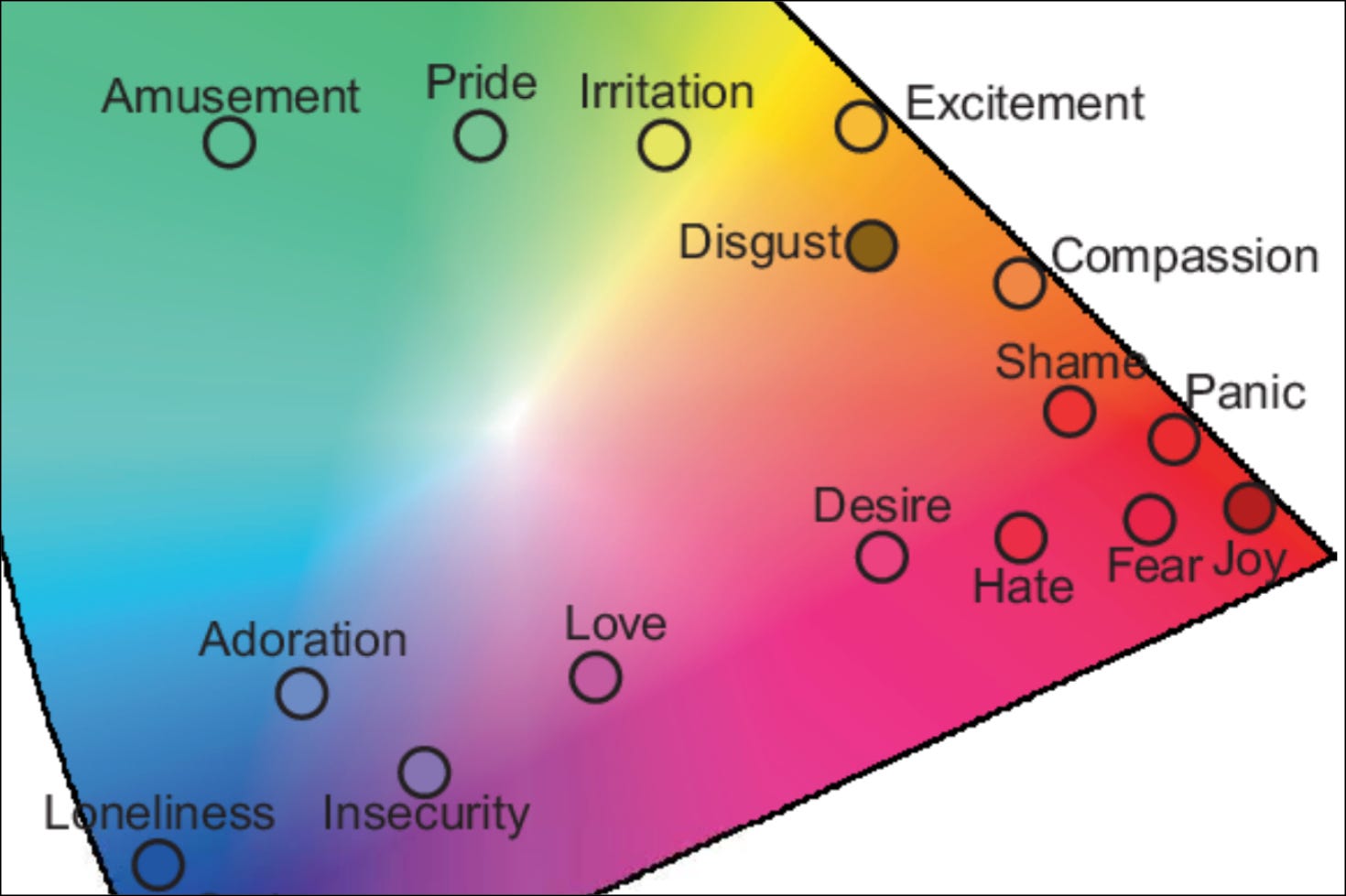
I have synesthesia. Feelings and colors are crossed in my brain: green is loud, white is ouch, gray is scratchy. Research about color synethesia describes how this is brain wiring, not whimsy. This has always felt like a core part of me, and I didn’t know it was different.
Then, when I was pregnant, I painted my living room six times trying to reach a very specific magenta, which I now understand means rebirth to me. Except I couldn’t paint, because I was pregnant. So my husband painted the living room six times, going slowly crazy, chasing a color that existed only in my nervous system. That’s the thing about synesthesia: it’s harmless until it gets in the way of a relationship.
INFJs have synesthesia of the heart - not a clinical term. I made it up. But it seems right, because for most people, being understood and being loved are separate experiences that sometimes overlap. In an INFJ, they’re crossed: being understood doesn’t just feel pleasant, it feels like safety, like belonging, like home. And because the crossing makes sense from the inside, the INFJ never questions it — the same way I never questioned that gray is scratchy.
But understanding is a cognitive skill and love is a commitment. Understanding means someone can accurately explain your motivations and fears. Love means someone cares about your wellbeing and changes their behavior in response to it. Some people understand you perfectly and don’t love you at all. Some people love you deeply while misunderstanding you every day.
The personality type most likely to be unhappy in marriage is the INFJ. But in my coaching experience, INFJs choose partners the way they make most major decisions: very well. The problem usually isn’t the choice. The problem is that everyone changes, different things resonate at different points in life, and people float closer and farther apart.
A long-term relationship is a constant process of losing and rediscovering each other. Short-term relationships feel intoxicating because there are moments when love and understanding spike at the same time. But the feelings ebb and flow independently, because they were never connected — except in your wiring. So every period of misunderstanding registers as a threat to the marriage, when it’s just a Tuesday.
When I did parenting research at Harvard, I expected the definition of a good parent to be complicated. It isn’t. Researchers define it as emotional and physical availability: Are you there? Do you listen? Do you respond? Listening and empathy are in there, but deep, complex understanding is not. Love, it turns out, has never required it.
This should free you, because it means you have more to give than the one thing you’ve been giving. Your deep understanding of people is a gift — it’s largely a social good, the thing that lets you see through the constructs that leave people lost and disconnected, and reconnect them to meaning. But not everyone wants understanding at every moment. Sometimes people need patience, or loyalty, or someone who stays. You are completely capable of all of those. You just haven’t been counting them as love.
So try this: Stop asking “Do they understand me?” and start asking “When they know something matters to me, what do they do next?” Do they change their behavior? Do they make room? Do they stay engaged when it’s difficult? That’s love. Understanding creates meaning, but where there is love, there is already meaning — even when it arrives imperfectly, missing the point of you on a regular basis.
THIS KNOCKED ME OUT. must go process in the corner
Oh. My. Gawd. YES to all of this. It explains why I dated literally dozens of people, many of whom were kind and caring, while not wanting to "settle." But for me, settling had nothing to do with money or looks but settling meant being with someone who didn't understand me. I was lucky enough to find an amazing human who both understands me and cares for me, and for that I'm eternally grateful to the universe.